

Make the most of your moves
Movement shows up in your day more often than you might realize. Carrying groceries, walking the dog, gardening, doing laundry, caregiving, playing, reaching, shifting, balancing — these everyday moments may feel ordinary, but they engage your body and mind in real ways. And when they happen repeatedly, they help support long-term health. No "workout" required.
Becoming aware of the movements already built into your day can help you get more out of them and may even inspire you to do a little more in ways that feel natural and doable, like picking up the pace on a walk, parking a little farther from your destination, or adding a bit more reach, lift or balance along the way.
Research shows that simply moving more, even in small, everyday ways, is linked to better long-term health, including lower risk of early death and heart-related events. And the benefits start without having to go to a gym or follow a structured workout plan, especially for people who aren't into that. Bottom line: It's never too late, and it's never "too little" to count.
This matters even more as we age, when natural declines in bone density and muscle mass can make everyday movements harder and increase the risk of falls and fractures. Regular movement that builds strength and balance helps counter these changes by maintaining muscle, supporting bone health and improving stability. Even activities like walking, carrying groceries, doing laundry, and gardening help us stay steady on our feet and confident in our movements. We all want to live independently and manage daily tasks with ease as we age.
Even better, movement often happens in short, ordinary moments. Studies involving wearable devices (e.g., an Apple or Fitbit watch) have found that brief bursts of movement — even for just a few minutes at a time — are associated with meaningful health benefits, particularly for people who don't identify as exercisers.
Movement is not one-size-fits-all
Walking and stair climbing are often considered the gold standard for gentle movement, but they aren't possible or accessible for everyone. And they aren't required for you to benefit from the movements you can make.
Pretty much anything that engages your body in ways that work for you (and that includes lots of options) can bolster long-term health. Depending on your abilities, comfort and energy, movement might look like:
- Stretching, shifting positions or gentle movements while seated or lying down
- Moving arms, legs or core muscles – with or without resistance
- Light balance, mobility or range-of-motion exercises
- Standing, weight shifting or supported movement
- Any activity that gets muscles involved, even briefly
Easy moves add up
Think of these as suggestions, not instructions. Choose what fits your body and your day.
- Change positions. Shift, stretch or reset your posture once an hour, while seated or standing.
- Borrow two minutes. Take a brief movement break between tasks for gentle stretches, arm movements or to transfer from a wheelchair to a fixed seat.
- Move while you wait. While coffee brews or a page loads, try light movement that feels comfortable (e.g., marching in place or shoulder rolls). Even subtle motion counts.
- Make it social (if you want). A shared stretch or moving alongside someone else can make movement feel easier and more enjoyable.
- Repeat one thing. Pick a single, doable movement you don't mind doing again tomorrow. Consistency matters more than difficulty.
Movement doesn't have to be difficult to matter. Sometimes, it's already baked into what you're doing every day.
If you have health questions or concerns, talk with your health care provider about what's right for you.
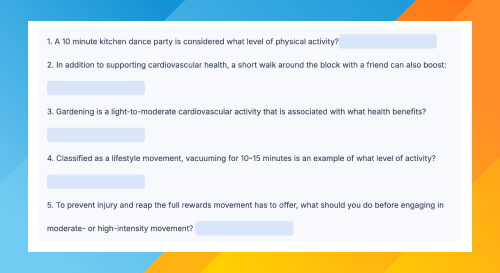
Test your knowledge
Sources
Centers for Disease Control and Prevention (CDC): Benefits of Physical Activity
National Institutes of Health (NIH): Light activity may lower harmful effects of sitting
NIH: Just 30 minutes of daily exercise can help correct a day of sitting
World Health Organization (WHO): Physical Activity
WHO: WHO guidelines on physical activity and sedentary behaviour
CDC: As you get older, physical activity can help you maintain the strength and flexibility needed to continue living independently and prevent falls. Older Adult Activity: An Overview
The National Institute on Aging (NIA): Strength exercises build muscle and can help prevent bone loss, and balance exercises help prevent falls. Exercise & Physical Activity: Your Everyday Guide
NIA: Three types of exercise can improve your health and physical ability
WHO: Physical activity contributes to the prevention of functional decline and helps maintain independence in older age. WHO guidelines on physical activity and sedentary behaviour, 2020
University of California: Give strength-training a try with advice from a UC expert
2026 Articles
June 2026 – Lift. Laugh. Repeat.
May 2026 – Coverage that travels with you
January 2026 – Kick off the year, with resources that are clear
2025 Articles
October 2025 – UC 2026 Open Enrollment: Review the changes and enroll
October 2025 – UC 2026 Open Enrollment: What's new for 2026
September 2025 – Don't hide from healthy
July 2025 – Take care of your kidneys and they'll take care of you
May 2025 – Planning a trip? Your UC Blue & Gold HMO travels with you
March 2025 – Eating better begins with Eat Right Now®
February 2025 – Get Insight and Tips for a Healthier Heart